


For different learning styles, goals, and comfort levels, finding a course that matches how you learn is HARD. Some people need visuals. While others wanna jump straight into code. Some need structure, others need flexibility. And many learners just want proof of effort at the end in the form of a certificate.
This list is built with that in mind. A list of free Python courses, each for a different type of learner, so you can stop forcing yourself into the wrong format and start learning in a way that works for you. From the classroom lover to the hermit, this article got everyone covered.
1. For learners looking for the best… Certificate!

Automation with Python – Google | Beginner-safe, real-world Python foundations
This course is catered toward those learners interested in having big names in their CV. This Google-backed course assumes you’ve never written code before. Python is introduced as a practical tool, not an academic subject, which makes it far less intimidating.
What makes this course special?
- Starts from absolute zero
- Python taught through real IT tasks
- Strong emphasis on problem-solving, not syntax
- Free certificate available via Coursera financial aid
Best for learners who need confidence before complexity, and validity from Google.
2. For code-first, hands-on learners
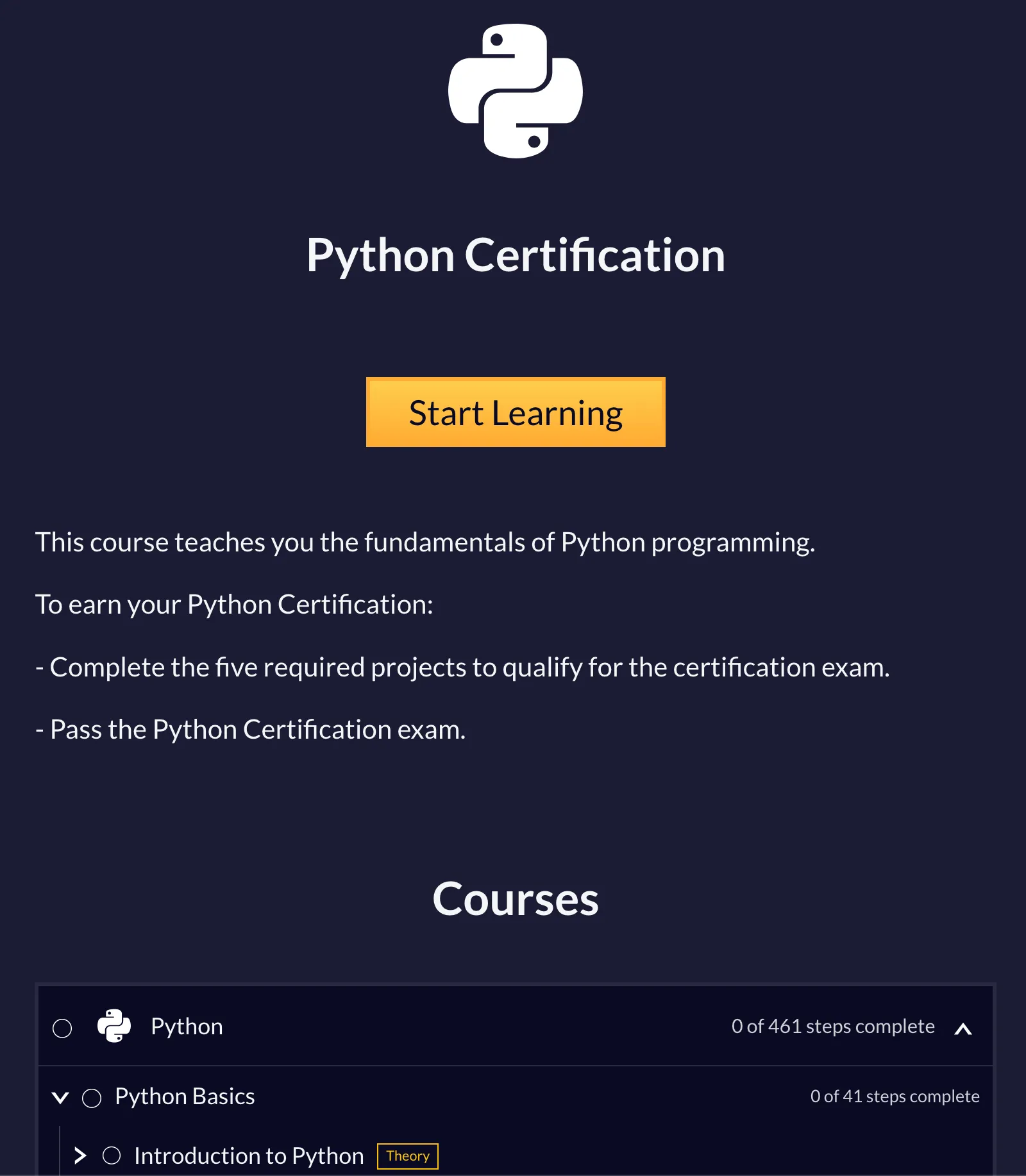
Python Certification – freeCodeCamp | Learn Python by building things that work
This course can be summarized as: Python in 461 Steps. The course has the best outline of any Python course that I’ve found online. Just take a look for yourself:
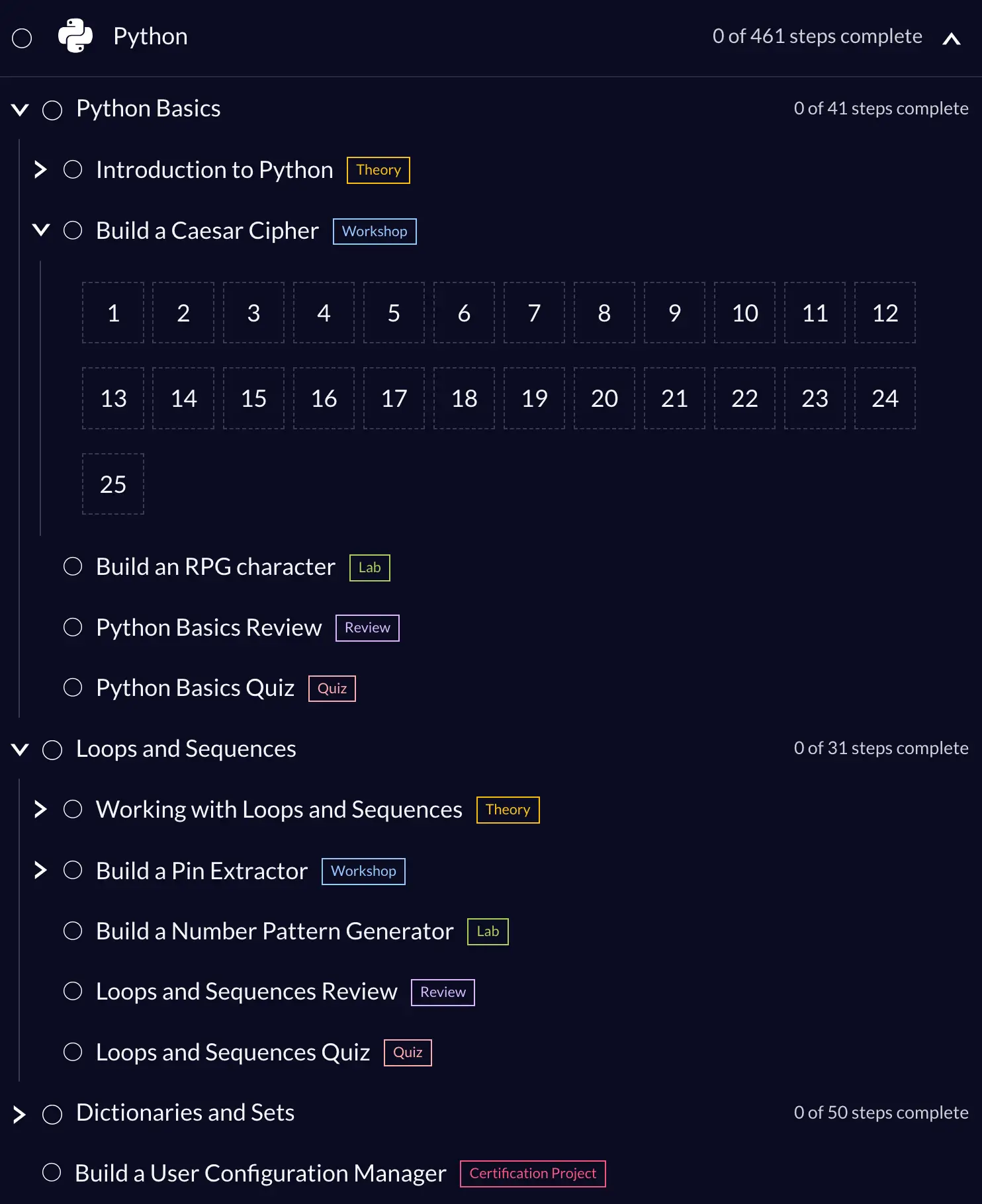
With clear demarcation of the content type, the user is free to choose or skip steps based on their interests.
What makes this course special?
- Project-driven learning
- Minimal fluff
- Mixture of theory, practicality and challenge
- Free certificate on completion
Best for “just let me code” learners.
3. For hands-on learners
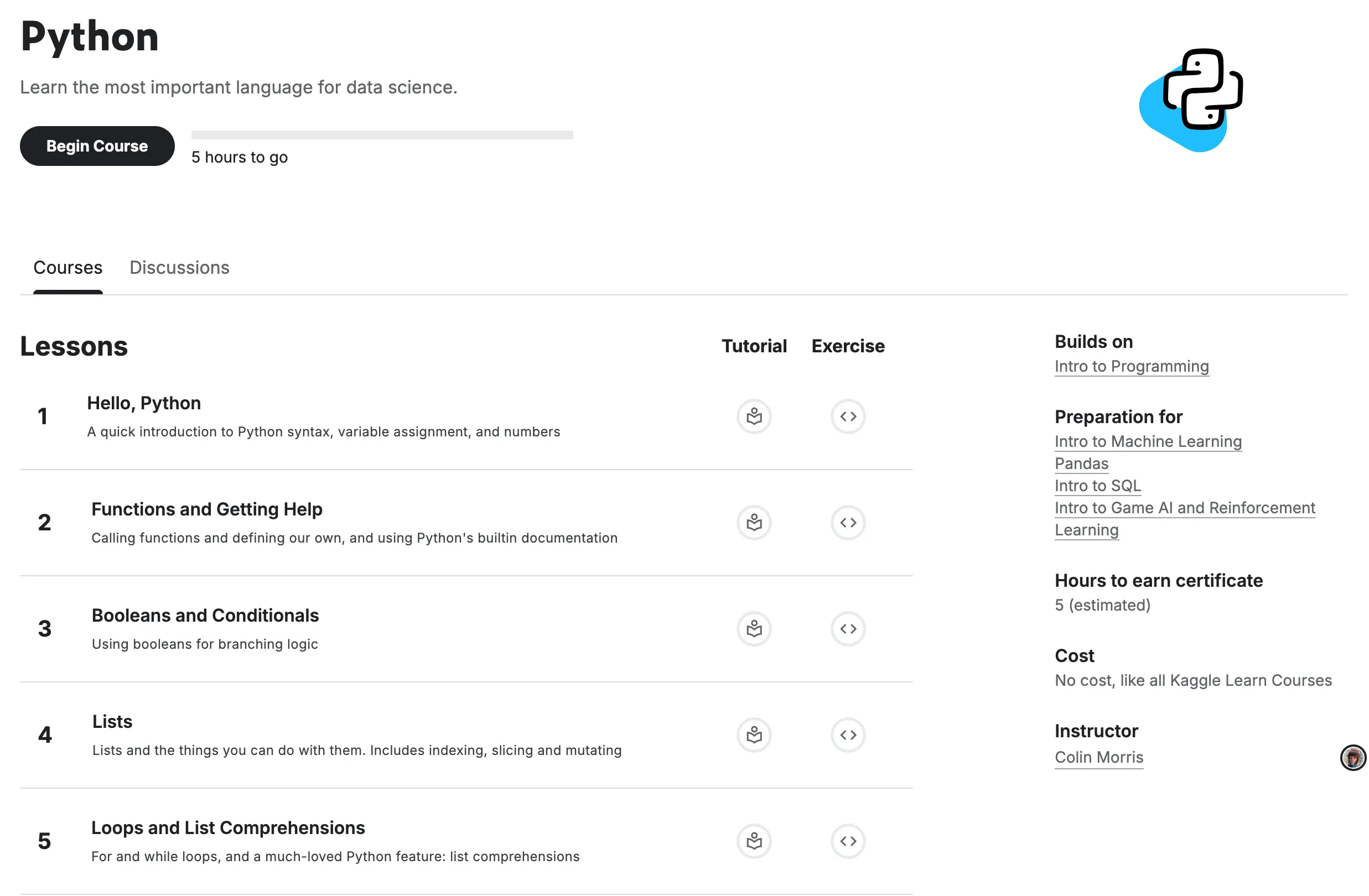
Python Basics – Kaggle | Short, focused lessons with instant practice
Each lesson is tight, purposeful, and reinforced with exercises. It’s like going through a huge colab file of Python fundamentals. Every code is executable and experimentation is advocated. Perfect for those who wanna do stuff instead of just listening about it.
What makes this course special?
- Bite-sized modules
- Practice after every concept
- No rambling
- Certificate on completion
Ideal for learners looking for a practical walkthrough of the language, instead of yap.
4. For structured & career-ready learning
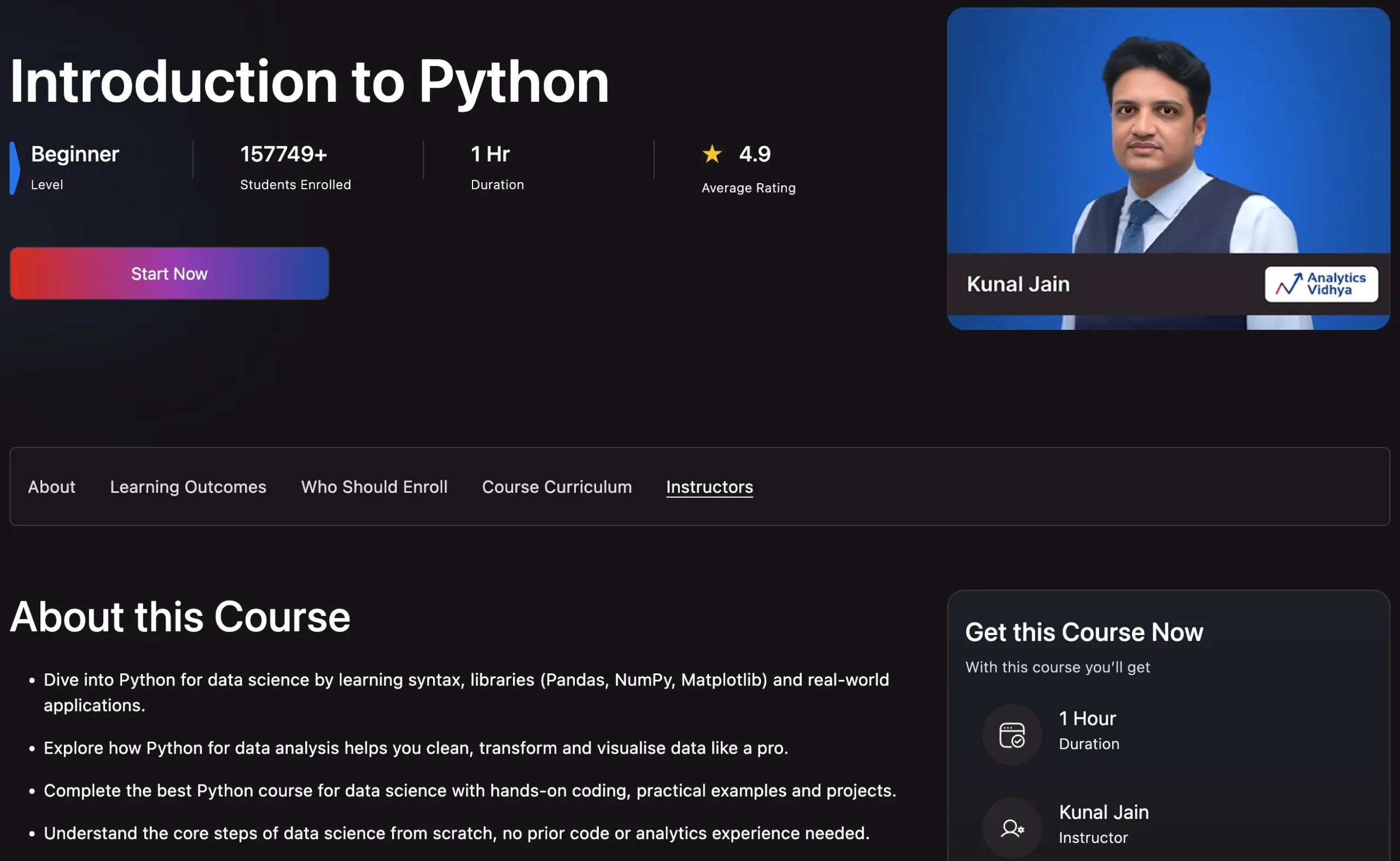
Introduction to Python – Analytics Vidhya | Job-aligned, step-by-step Python learning
This course feels like a roadmap instead of scattered lessons. Concepts build logically and stay grounded in real use cases. The course branches off to other domain courses that’re also offered for free.
What makes this course special?
- Strong curriculum flow
- Beginner-friendly but purposeful
- Clear link to data and ML paths
- Free certificate included
Perfect for long-term, career-focused learners.
5. For industry-ready practical learning
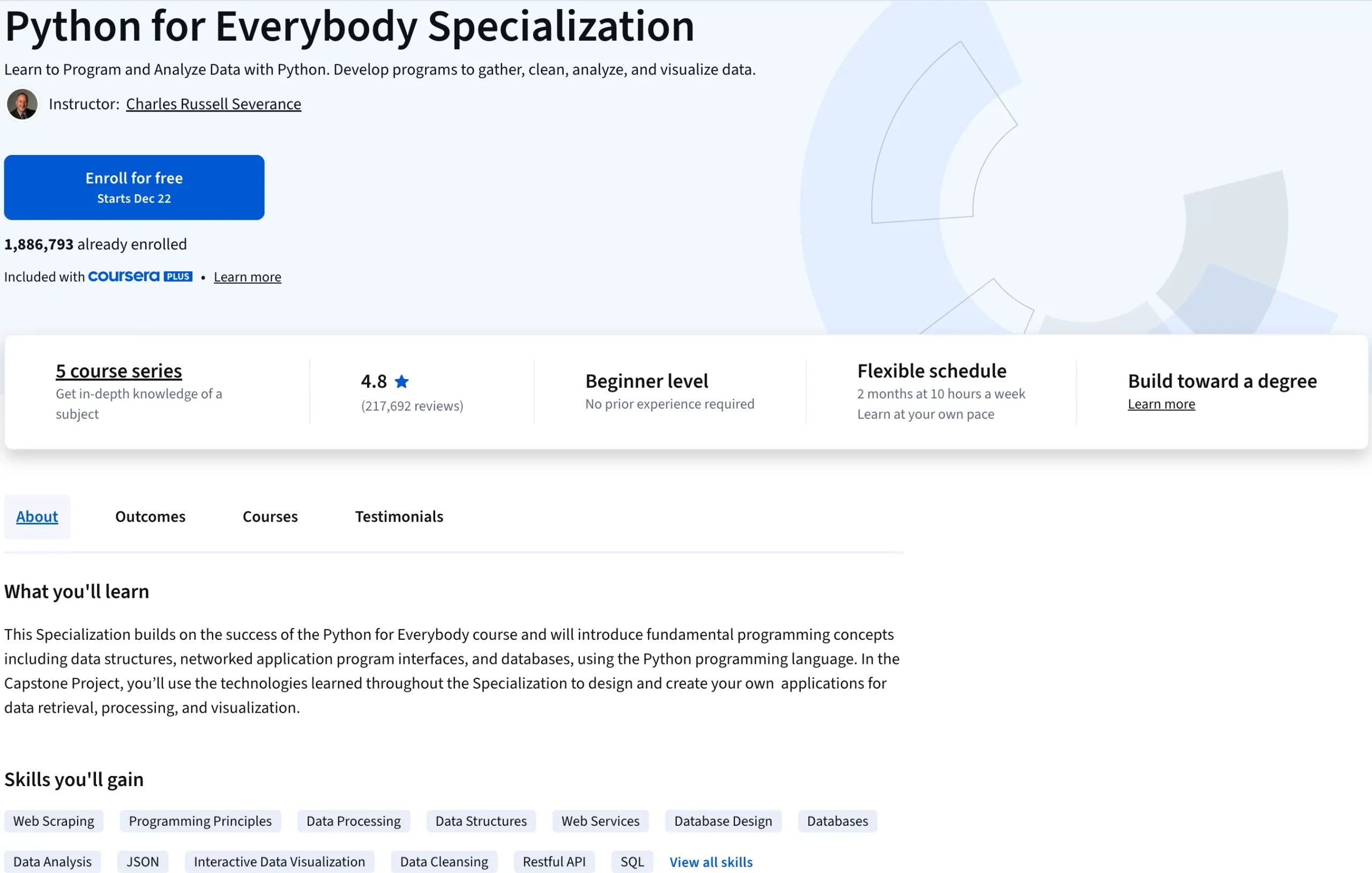
Python for Applied Data Science & AI – IBM | Practical Python with immediate industry context
This course doesn’t treat Python as an abstract language. It’s introduced as a working tool for data analysis, automation, and AI workflows.
What makes this course special?
- Python taught through real data problems
- Clean, practical examples
- Industry-aligned thinking from day one
- Free certificate available via Coursera financial aid
Ideal for learners who want Python to do something.
6. For learners with short attention spans
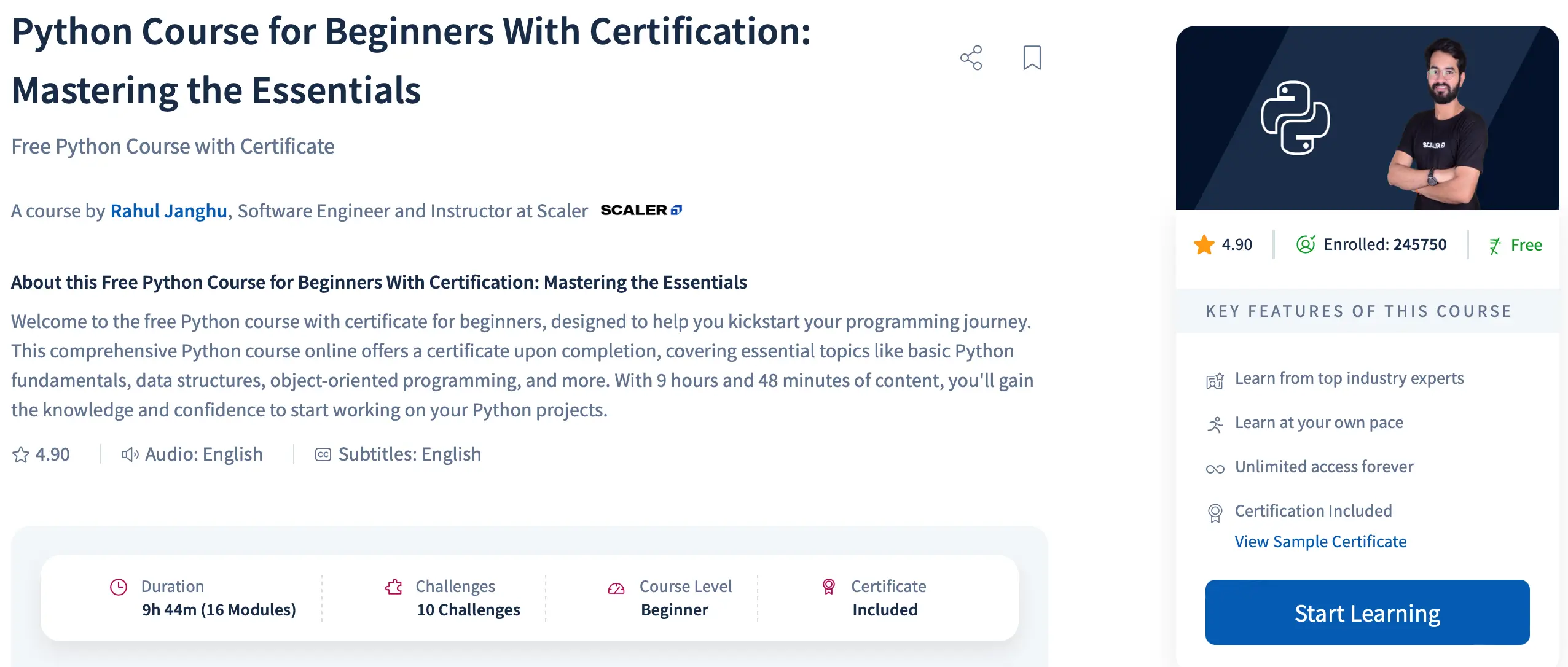
Python for Beginners – Scaler Topics | Concepts explained through instructor
If you learn best by watching code turn into output under guidance, this course is for you. With elaborate discussions about the fundamentals of Python, the course gives sufficient time to develop an intuitive understanding of the language.
What makes this course special?
- Example-heavy explanations
- Guided learning via. Instructor
- Minimal theory overload
- Free certificate on completion
Great if abstract explanations don’t stick and you require time understanding concepts.
7. For Statistical learners
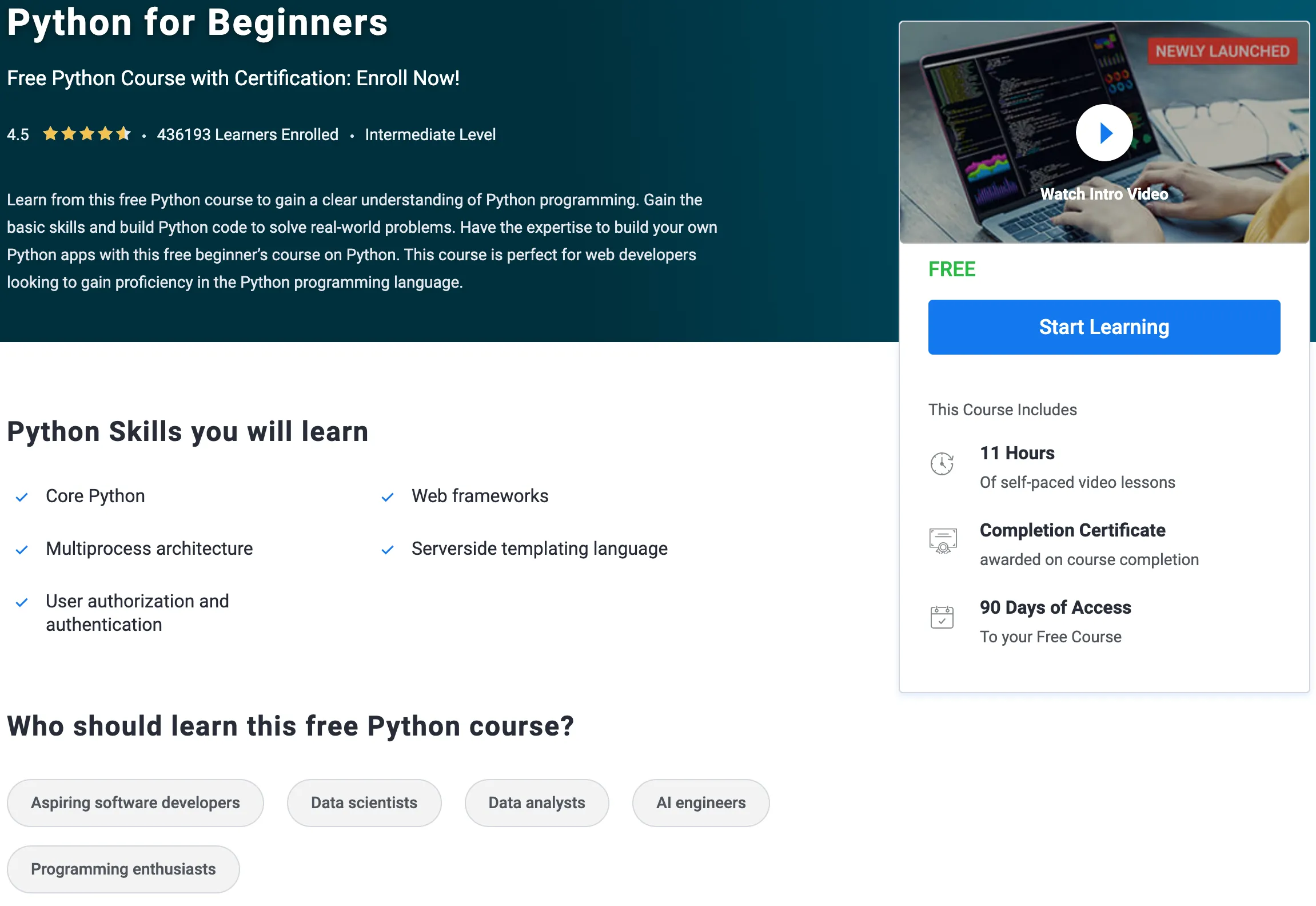
Python for Beginners – Simplilearn SkillUp | Task-driven Python for statistics
If your goal is to learn Python with an intermediate emphasis on scientific computing, then this course is for you. Unlike other courses on this list, this course doesn’t shy away from delving into libraries that are focused on statistics, preparing the learners for real-world workloads.
What makes this course special?
- Focus on statistical libraries (numpy, matplotlib, scipy etc)
- Real-life automation examples
- Clean explanations
- Free certificate provided
Great for those looking to learn about scientific libraries while learning the language.
Bonus: Learning Scientific Programming with Python by Christian Hill, is a must read if you’re into scientific programming. It’s a microcosm of this entire course.
8. For a comprehensive roadmap
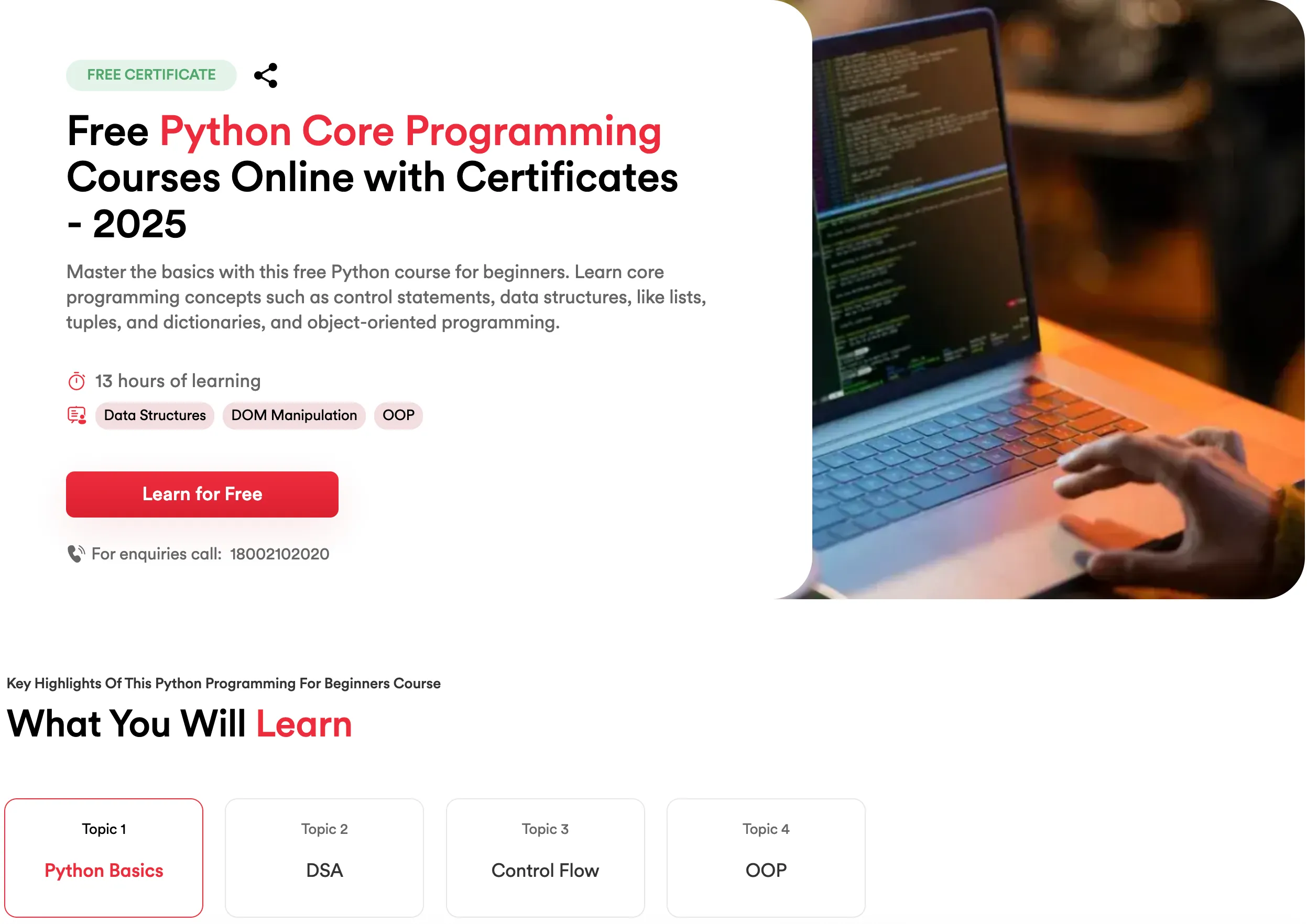
Programming with Python – upGrad | Linear, classroom-style Python learning
This course follows a traditional structure, making it familiar to follow from start to finish. From the history of the language to OOPS and DSA, the course doesn’t limit itself to just the essentials. Great for those looking to get into competitive programming after this course.
What makes this course special?
- End-to-end basics covered, plus some
- Delves into proximal concepts
- Traditional learning flow
- Free certificate on completion
Best for disciplined, roadmap-driven learners.
9. For learners who want conceptual depth with clarity
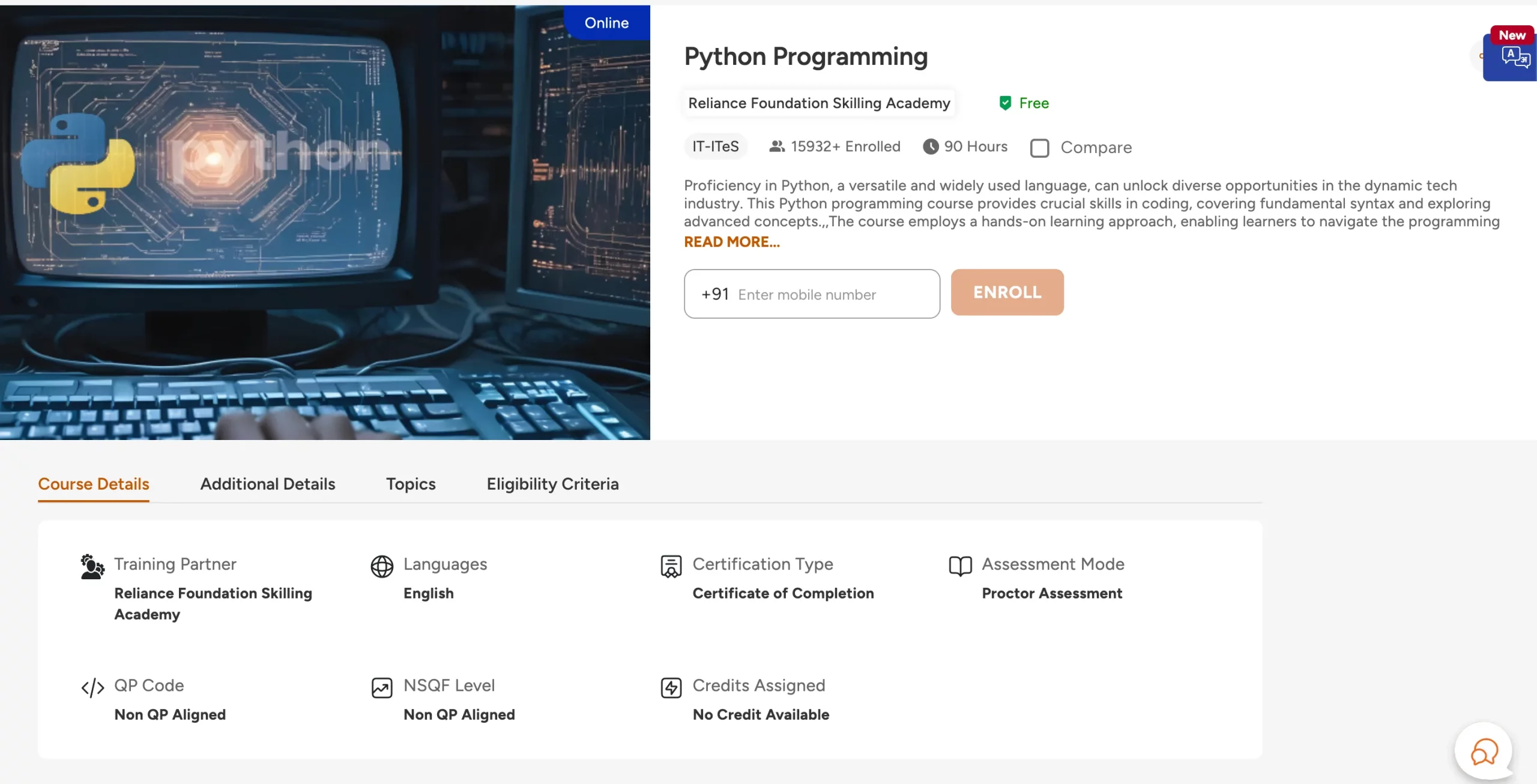
Python Programming – Skill India Digital | Practical Python for employment
This course emphasizes learning of the language from a jobs perspective. An initiative by the Indian government, the platform which hosts the course, offers jobs in place:
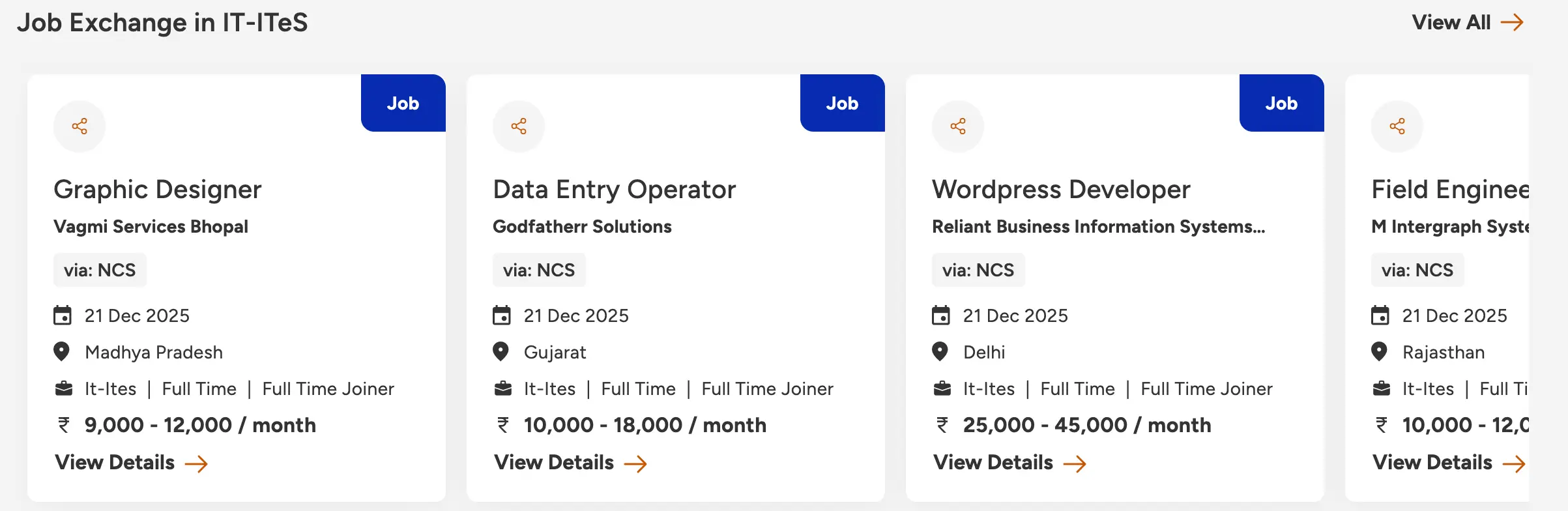
This should be the course of choice for those looking to get a job immediately after the learning process.
What makes this course special?
- Strong conceptual focus
- Clear explanations
- Inplace job application support
- Free government-backed certificate
Good for learners who value employment as much as learning.
10. For learners who want a professional developer track
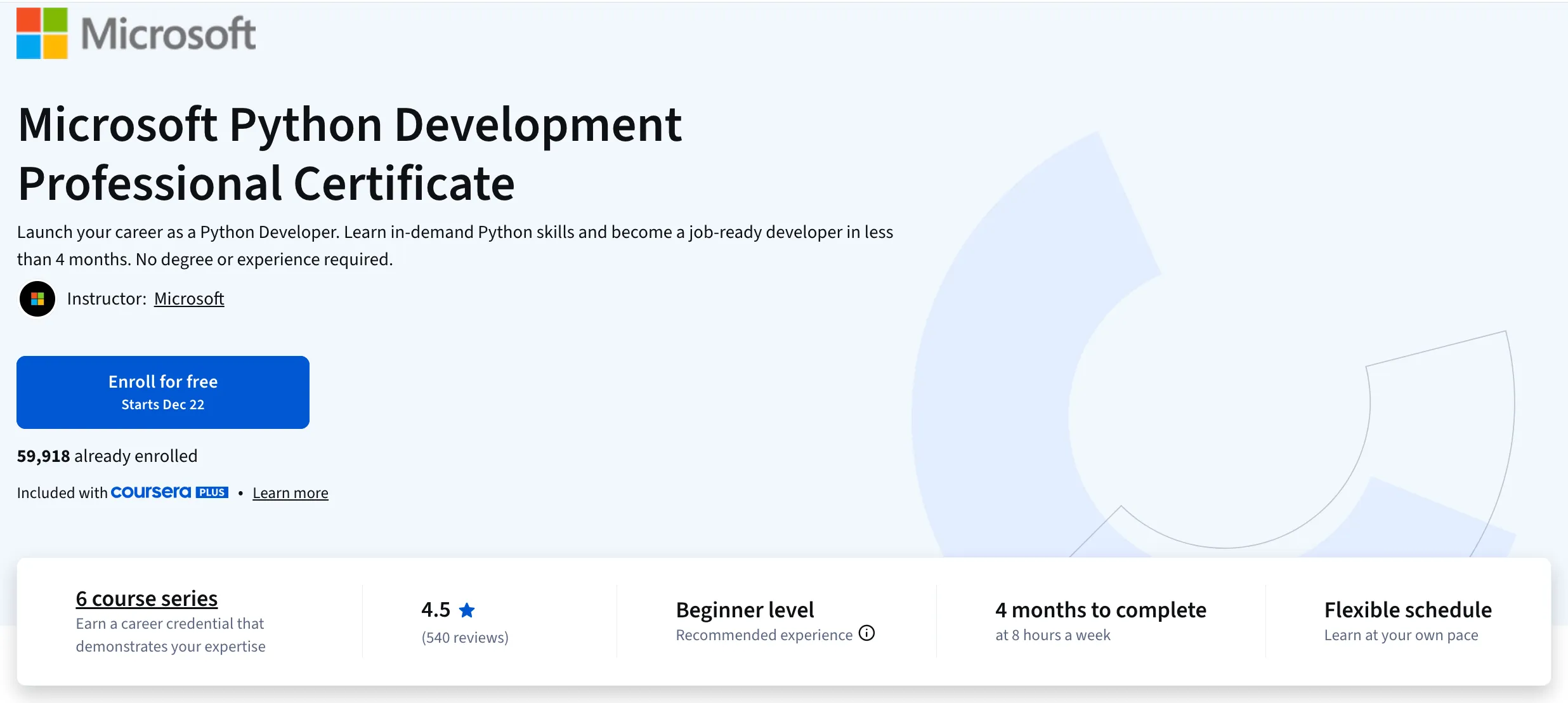
Microsoft Python Developer Certificate | Industry-aligned Python for upskilling
This Microsoft-backed path frames Python as a professional development skill, not just a beginner language. It presents it as a part of a puzzle, in the overall development of a professional individual.
What makes this course special?
- Python used in real dev scenarios
- Clear best practices
- Career-aligned outcomes
- Free certificate via Coursera financial aid
Ideal as a second-pass or upskilling course. Shouldn’t be the starter.
Final thought
Even though the end goal is clear—Getting Certified in Python! The path to reach there isn’t the same for everyone. Your learning style matters and the end goal matters more than following a fixed order.
If you’re just here for a certificate, then Google’s Automation with Python should be the choice. Learning to upskilling yourself, then Microsoft’s Python Developer course is the best. If learning is a path to the get a job, then Python Programming by SIDH would suffice. And if you’re learning Python for career growth, structured, application-oriented content that provides a certification, Analytics Vidhya’s Introduction to Python will serve you best.
The idea isn’t to get every certificate out there. It’s to pick the one that feels rewarding and enjoyable. All the courses mentioned in this article offer free certfication, so the emphasis should be on learning instead.
The channels outlined should suffice for most audiences. If you’d like something specifically tuned for you, then you can check out Mentornaut.
Frequently Asked Questions
A. Yes. All listed courses provide a free certificate, either directly or through verified financial-aid options. pasted
A. Google’s Automation with Python is the fastest, most recognized option if certification is your primary goal. pasted
A. Absolutely. Several courses start from zero and are designed specifically for first-time programmers. pasted

I specialize in reviewing and refining AI-driven research, technical documentation, and content related to emerging AI technologies. My experience spans AI model training, data analysis, and information retrieval, allowing me to craft content that is both technically accurate and accessible.
Login to continue reading and enjoy expert-curated content.

